


Each year, market analysts attempt to predict where the S&P 500 will end the year. They issue estimates ranging from optimistic highs to cautious lows. Yet, time and time again, the actual market performance falls outside these predictions—often by a wide margin.
Now, with the stock market near an all-time high, investors are asking:
- Is now a good time to invest?
- What happens if the market declines from here?
- How should I protect my retirement assets?
At Alison Wealth Management, we believe the key to financial success is not in market timing but in having a disciplined, structured investment strategy.
Why Market Forecasts Are Almost Always Wrong
Wall Street analysts spend months crafting forecasts, yet history shows that their predictions frequently miss the mark.
Key Problems with Market Forecasting:
- Markets React to the Unexpected – Unforeseen events such as economic downturns, inflation spikes, or geopolitical tensions make predictions unreliable.
- Analysts Are Often Too Optimistic or Too Pessimistic – Their forecasts rarely align with reality, often underestimating major bull runs or failing to predict downturns.
- Short-Term Thinking Can Lead to Bad Decisions – Forecasts tend to focus on the next 12 months, whereas successful investing requires a long-term perspective.
Historical Example: Forecasts vs. Reality
Many analysts predicted that rising interest rates and inflation would cause a steep market decline in 2023. Instead, the S&P 500 soared beyond expectations, defying even the most optimistic predictions.
This pattern repeats time and again—proving that no one can reliably predict short-term market movements.
Investing at All-Time Highs: A Common Concern
With markets at record highs, investors worry: Is now the right time to invest, or should I wait?
The fear is understandable. The logic seems sound—if the market is at a peak, a decline could be around the corner. But history tells a different story.
Key Insights About Investing at Market Highs:
- New highs are common – Markets frequently set new records; avoiding investing at highs means missing out on growth.
- Returns remain strong after all-time highs – Historical data shows that markets continue to rise over time, even after reaching record levels.
- Trying to time the market is risky – Investors who stay out of the market waiting for a dip often miss key growth periods.
Below is a chart illustrating how markets have historically performed after reaching all-time highs:
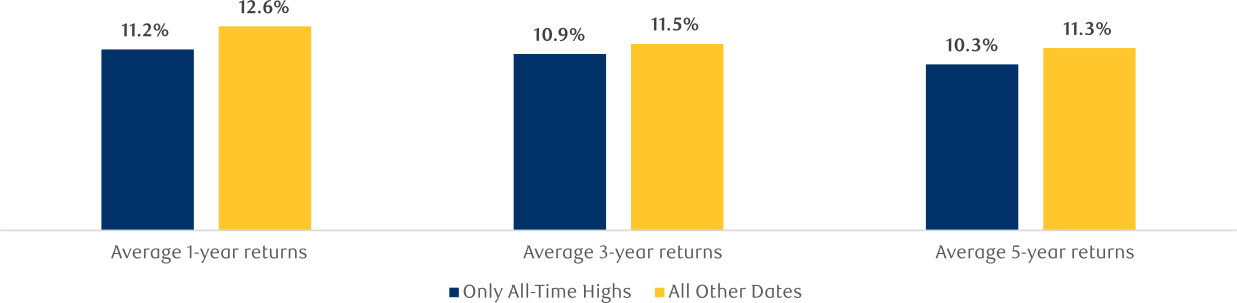
Source: Bloomberg, RBC GAM. Data for S&P 500 as of January 1, 1950 to March 2024. All-dates refers to rolling 1-, 2- and 3-year returns starting from each trading date during this time. Returns in U.S. dollars. An investment cannot be made directly into an index. The graph does not reflect transaction costs, investment management fees or taxes. If such costs and fees were reflected, returns would be lower. Past performance is not a guarantee of future results.
The takeaway? Sitting on the sidelines waiting for a "better time to invest" is often a mistake.
How Different Investors Should Approach Investing at All-Time Highs
For Younger Investors with a Long Time Horizon
If you're still working, saving, and building wealth, a market at an all-time high should not deter you from investing.
- Markets continue to rise over time – Investing regularly ensures participation in long-term growth.
- Dollar-cost averaging reduces risk – Investing consistently helps smooth out volatility.
- A diversified portfolio provides stability – Staying invested across asset classes mitigates risk.
For Retirees or Those Nearing Retirement
If you are retired or approaching retirement, market downturns can have a bigger impact on your financial security. That’s why The Bucket Plan® is essential—it ensures your assets are structured to withstand market volatility.
1. Ensure Your “Now” and “Soon” Buckets Are Fully Funded
With markets at an all-time high, now is the time to review your retirement strategy:
- The Now Bucket (Up to a year's worth of income needs) should have liquid, low-risk assets (cash, money market funds, short-term bonds) to cover your expenses for the near future.
- The Soon Bucket (2-10 years of income needs) should be invested conservatively, allowing for steady growth while minimizing downside risk.
By fully funding these buckets now, retirees won’t need to sell stocks in their Later Bucket during a downturn, allowing them to ride out volatility.

2. Consider Alternative Investments to Hedge Against Market Corrections
Traditional stock and bond investments can be volatile, so retirees should consider alternative strategies for downside protection and income stability in their Soon Bucket.
- Defined Outcome ETFs – Market exposure with built-in downside protection.
- Indexed Annuities – Principal protection with potential guaranteed income.
- Private Credit Funds – Higher income yields and diversification.
- Covered Call Income Strategies – Generating additional income while reducing downside risk.
- Protective Stock Option Strategies – Using options as insurance against a downturn.
By strategically using these tools, retirees can reduce risk and generate predictable income.
Final Thoughts: A Structured Plan Wins in Any Market
While concerns about investing at an all-time high are understandable, history tells us that markets tend to keep growing over time.
- For younger investors, staying invested and contributing regularly is key to long-term success.
- For retirees, ensuring that short- and medium-term income needs are secure through The Bucket Plan® can help weather short-term market volatility.
At Alison Wealth Management, we help clients build investment strategies that adapt to market conditions while keeping their long-term goals in focus.
If you're wondering whether your portfolio is prepared for what’s ahead,schedule a consultation with our team today.