After reaching more new highs recently, markets have experienced a pullback as well as heightened volatility. Understandably, market volatility may be the cause of some concern or fear. Headlines can further create the feeling of uncertainty, but staying focused on long-term fundamentals is critical.
Given the current climate, we wanted to break down what we see happening, why it matters, and what we’re doing as a result.
What's driving recent volatility?
Concerns about the impact of inflation and tariffs on consumer sentiment are one major driver.2 If Americans lose confidence in the economy, they may pull back on spending, which is the biggest driver of economic growth.
Concerns over tariffs and their long-term impact is also driving short-term uncertainty although history suggests markets often price in these risks ahead of time.
During President Trump’s previous tariff implementations (2017-2020), the U.S. market remained strong despite uncertainty.
Additionally, it’s important to remember that U.S. economic growth is primarily driven by services (approximately 80%), with imports and exports accounting for a smaller share. While trade policies may create short-term disruptions, they are unlikely to derail the long-term strength of the U.S. economy.
Federal workforce reductions are also adding to the uncertainty. The new administration has implemented significant changes by laying off thousands of newer employees and offering buyouts to many more.3
It's not yet clear what the long-term effect of these job cuts may be, but the impact may radiate out to other areas of the economy if workers can't find new jobs and households cut back spending.
If you or someone close to you has been impacted by layoffs, please reply to this email and let me know. We can navigate the financial changes together.
Why we’re cautiously optimistic about markets despite the uncertainty
The good news is that Q4 corporate earnings look very positive so far. If trends continue, we could see the largest year-over-year earnings increase since 2021.
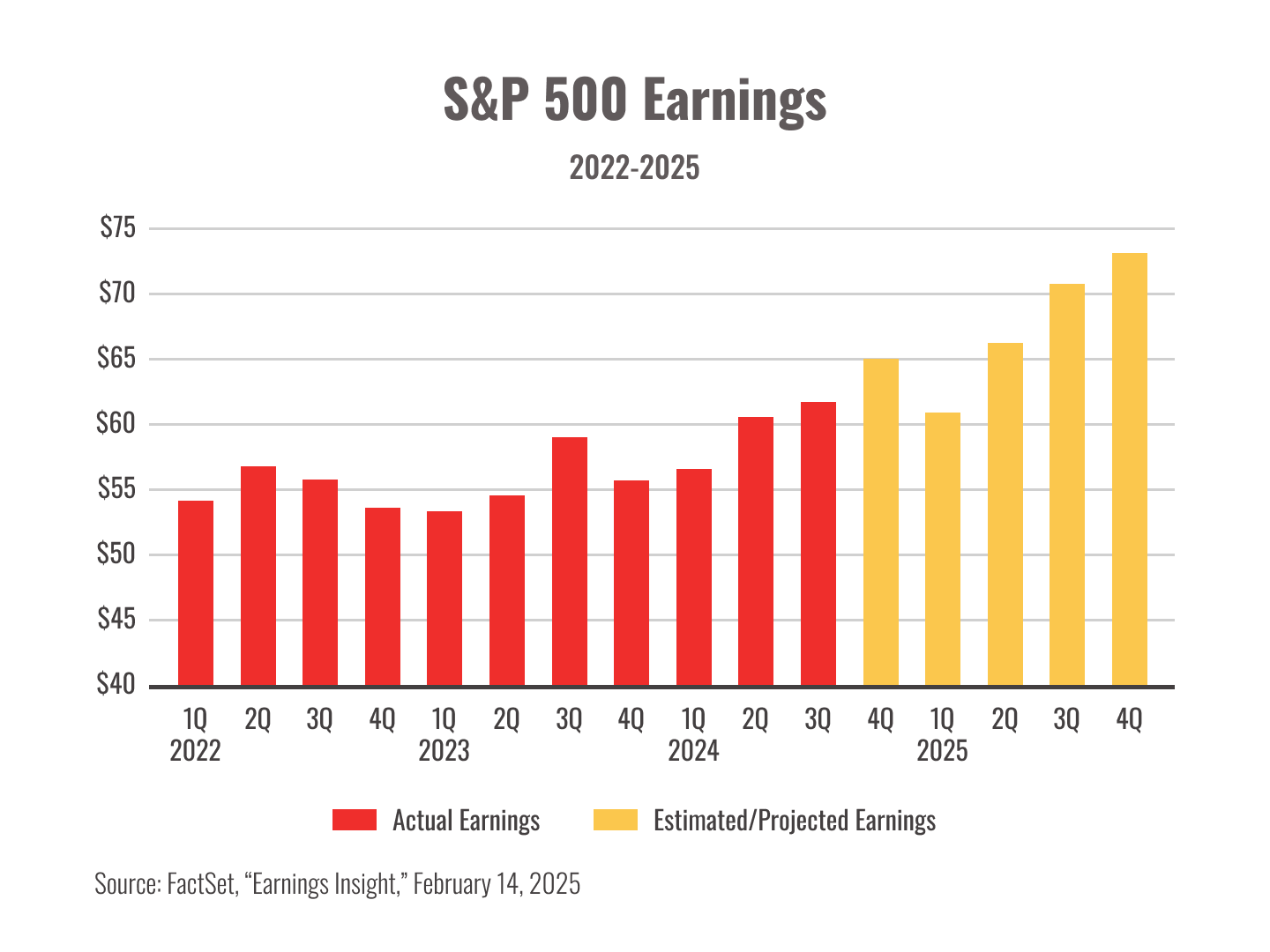
Many companies are also reporting better-than-expected results, suggesting business conditions were stronger than anticipated.5
With today's high stock valuations, continued earnings performance remains critical for market growth. If business performance doesn't keep up with expectations, we can expect a pullback.
Due to this, we maintain a stronger conviction of the U.S. market due to its strong economic foundation, innovation leadership (especially in AI), and corporate resilience.
Despite short-term fluctuations, large-cap tech companies continue to generate exceptional returns, maintain strong balance sheets, and invest in AI—an area that is a national priority for the U.S., China, and emerging economies. AI investments today are likely to drive long-term productivity and economic growth in ways that are not yet fully realized.
Additionally, many of the companies we own are global businesses, inherently providing geographic diversification.
What does this mean for your portfolio?
As you already know, pullbacks and volatility are a normal part of investing, especially during periods of major uncertainty.
When we built your portfolio together, we designed it to help weather these kinds of fluctuations while positioning you to pursue your goals. This doesn’t mean we’re sitting back and doing nothing. Rather, we’re taking a calculated approach to market volatility and making adjustments to portfolios where appropriate.
While uncertainty is part of investing, history has shown that those who remain patient and disciplined through market fluctuations are rewarded over time. If you have any questions or would like to discuss your portfolio in more detail, please don’t hesitate to reach out.
We appreciate your trust and remain committed to helping you navigate these market conditions with confidence.


